
Professional Packing Services vs DIY Packing: Which Is Right for Your Move?
Considering Professional Packing Services vs DIY Packing? Hello Removals helps you weigh your options and choose a practical approach for a smoother move.
Choosing between professional packing services vs DIY packing can shape how manageable your move feels long before the removal van arrives. Packing independently can offer control and may suit a small, well-planned household. Professional support can reduce a demanding workload when time is tight, belongings are delicate or several people in the household need to keep daily life running.
For people planning a London move, the decision is rarely only about boxes. It affects your schedule, the protection of your home contents and whether everything is ready when the removal team arrives. Hello Removals helps customers consider practical house-removal arrangements, including how packing fits into the wider move. The best option depends on your timetable, the volume and nature of your belongings, your budget and the help available to you.
What is the difference between professional packing and DIY packing?
With professional packing, a removal company’s packing team prepares agreed household items using materials and methods selected for the move. Depending on the arrangement, this may include supplying boxes, wrapping fragile goods, protecting furniture, labelling cartons and preparing an inventory or packing list. The exact scope varies, so it is important to establish what is included rather than assuming every item or task is covered.
DIY packing for moving house means you source the materials, decide how to protect each item and complete the packing yourself before moving day. You can work at your own pace and decide exactly where every possession goes. In return, you take on the planning, physical work and responsibility for making boxes safe to lift, transport and unload.
Neither approach is automatically right for every move. A lightly furnished flat with several weeks to prepare is very different from a family home packed around work, school, access restrictions and a fixed completion date. The useful question is not simply “which is better?” but “which approach makes this particular move more reliable?”
Professional packing services: what do they involve?
What professional packers generally handle
Professional house packing services are designed to turn a large, variable task into an agreed plan. Packers may bring suitable packing boxes, packing paper, bubble wrap and protective materials, then pack room by room. Kitchens, ornaments, books, wardrobes and fragile items often need different approaches because weight, shape and vulnerability are not the same.
A professional removal packing service may also help create a more consistent system for box labelling. Clear labels can identify the destination room, major contents and any handling need, helping both the removal crew and you at the unloading end. When arranging house removal support across London, ask how the packing plan connects with loading, delivery and any storage requirements.
The key benefit is not merely that somebody else fills boxes. It is the potential to remove a concentrated block of work from your own schedule and have the household prepared in a coordinated way. That can be particularly valuable when a move has a firm date and little room for unfinished packing.
What you still need to decide
Even where professionals pack most of the home, customers usually need to make decisions in advance. Declutter items you no longer want to move, identify possessions that must travel with you, and separate important documents, medication, keys, chargers and overnight essentials. You may also prefer to pack private personal items yourself.
Be explicit about valuables, collections, artwork, unusually heavy objects and specialist items. Ask what the provider can pack and transport, whether any items need specialist handling, and whether there are exclusions. Hazardous or restricted materials should never be assumed to be acceptable for a removal van; confirm them in advance.
A professional packing visit does not remove the need for organisation, but it can make that organisation more focused. Instead of spending evenings searching for boxes and wrapping every glass, you can prepare decisions, access and priorities for the team.
How DIY packing works for a house move
Planning and sourcing DIY packing materials
DIY packing works best when it begins early and follows a realistic room-by-room plan. Start with low-use rooms, seasonal belongings and décor, leaving everyday essentials until nearer the move. Count what you need rather than collecting a random assortment of cartons: strong boxes in manageable sizes, tape, marker pens, packing paper and cushioning materials all have a role.
Use small boxes for dense belongings such as books, and avoid overfilling larger cartons until they are difficult or unsafe to lift. Keep box bottoms properly secured, fill empty space so contents do not shift, and avoid mixing unrelated rooms simply to use up spare room. A little consistency makes unloading and unpacking far less frustrating.
Protecting, labelling and organising boxes
For breakable kitchenware, wrap items individually where appropriate, cushion the base and sides of the carton, and keep the heaviest pieces low down. Mark fragile boxes clearly, but remember that good internal packing matters more than a label alone. Furniture may need covers or other protection suited to its material and condition.
Write the destination room and a short contents description on more than one side of each box. Numbering boxes can help you check that everything has arrived, while a simple inventory can be useful for high-value or important belongings. Poorly sealed cartons, vague labels and last-minute packing are among the common house-moving mistakes that can create avoidable pressure on the day.
DIY gives you direct control over what goes where, but it needs disciplined follow-through. If boxes are still open, unlabelled or scattered around the home when the removal team arrives, loading may take longer and the move can become harder to manage.

HELLO REMOVALS
Why Choose Us? Your Move, Our Priority
- Experienced & Professional Team
- Comprehensive Service
- Local & Long-Distance Experts
- Stress-Free Moving
- Reliable & Transparent Pricing
Professional packing vs DIY packing: the key differences
The practical differences become clearer when you compare what each route asks of you. Cost matters, but it should be considered alongside time, energy, material quality and the consequences of a rushed final week.
| Consideration | Professional packing | DIY packing |
|---|---|---|
| Time and workload | Transfers much of the packing work to an agreed team and schedule. | Requires you to plan, pack and check every room around other commitments. |
| Materials | Materials may be supplied as part of the agreed service; confirm exactly what is included. | You choose, buy or source materials and judge whether they are suitable. |
| Control | You set priorities and instructions, but others pack the agreed items. | You decide every packing detail and can work at your own pace. |
| Protection and responsibility | Methods, scope and applicable protection arrangements should be confirmed in writing. | Your preparation has a direct effect on box condition, loading readiness and any applicable terms. |
| Moving-day readiness | Can help create a defined packing deadline before collection. | Depends on completing the work before the removal crew is due. |
Time and workload
Packing time is frequently underestimated because it is made up of many small decisions: sorting drawers, finding materials, wrapping awkward pieces, taping boxes and labelling them properly. A professional option may be worth investigating if your available evenings and weekends are already committed, if you are caring for children or relatives, or if a completion date leaves little contingency.
Self-packing can be manageable where the household is small, the move date is flexible and several capable people can help. However, be honest about whether that help is confirmed. A practical plan should allow time for cleaning, paperwork and handover tasks as well as box packing. Understanding how long a house removal takes can also help you see how unfinished packing may affect the wider day.
Cost and material responsibility
DIY may appear less expensive because you are not paying for packing labour, but it still has costs in materials, transport for collecting supplies and your own time. Reused boxes can be useful if they remain clean, dry and structurally sound; damaged cartons are a poor foundation for a move. Conversely, the cost of professional packing services should be assessed against the work being transferred, the materials provided and the convenience gained.
Ask for clarity rather than relying on a headline comparison. What rooms or item categories are included? Are cartons and wrapping materials included? Is unpacking available or separate? What happens if access limitations mean packing takes longer? A clear scope lets you compare an actual professional offer with a realistic DIY shopping and time list.
Protection, breakage risk and liability
Professional packers should use materials and methods suited to the belongings being moved, but the protection of any move depends on the agreed service and careful handling throughout. The BAR removals industry Code of Practice explains, for its members, the importance of suitable packing materials and methods as well as the need to offer insurance or another contractual protection option, subject to relevant terms and declarations. This is not a promise that every removal provider follows the same code or that any particular cover applies.
For your decision, the important action is to ask the provider what protection arrangements apply, how self-packed boxes are treated, and what information or declarations are required. Confirm liability, exclusions and any insurance-related terms before the move, particularly for delicate belongings and valuable possessions. Do not assume that a “fragile” label changes the agreed position.
Fragile items, valuables and specialist possessions
Glasses, ceramics and kitchenware need secure internal cushioning; valuables and important documents may be better kept with you where appropriate; and specialist possessions may require a separate conversation. Pianos, large artworks, antiques, unusual electronics or items with particular handling needs should be identified early. The right answer may be professional packing, customer preparation, specialist help or a combination—depending on what the provider agrees to handle.
Convenience and control
DIY is often preferred by people who want complete control over every drawer and box. It can be satisfying to sort as you pack, and it gives you an opportunity to declutter carefully. The trade-off is that decision fatigue can build quickly when every room needs attention.
Professional packing can offer convenience and a defined finish line, but it works best when you communicate clearly: identify items not to pack, set aside essentials and explain room priorities. It is not a choice between caring and not caring about your belongings; it is a choice about who performs the packing work and how the responsibilities are agreed.
When is professional packing likely to be the better choice?
Professional help is often most useful when the move has complexity that your own schedule cannot comfortably absorb. It may be worth considering if you are moving a larger household, have a short lead time, are managing work or family commitments, or have many fragile goods that require careful preparation.
- Your completion, tenancy-end or collection date is fixed and you have limited packing time.
- The home contains a high volume of kitchenware, books, ornaments or delicate belongings.
- You are moving with young children, caring responsibilities or limited practical help.
- Stairs, parking, restricted access or a busy London schedule make the wider move demanding.
- You want a coordinated plan for packing, loading and, if relevant, storage.
It can also make sense when the value of reduced pressure outweighs the additional service cost for you. For example, someone relocating from a busy household in house removals in Chelsea may prioritise a clear packing timetable because access and moving-day coordination need attention alongside normal life.
When can DIY packing make sense?
Self-packing is a sound choice when you have enough time, suitable materials and a workable system. It may suit a smaller move, a household that has already decluttered, or anyone who strongly prefers to sort and pack personal possessions themselves. It can also be practical when you wish to pack gradually over several weeks rather than have a concentrated packing appointment.
DIY is most likely to run smoothly when you can finish well before collection, not merely start in earnest the day before. Leave a buffer for the items you use daily, for unexpected sorting and for replacing any weak boxes. If your plan relies on friends, confirm their availability and avoid making the whole move dependent on a last-minute packing session.
A mixed approach can be a sensible middle ground. You might pack clothing, books and non-breakable belongings yourself while asking about support for fragile kitchenware, awkward items or the rooms you have not had time to complete. Whether that is available, and how it affects responsibility and protection, should be agreed with the removal provider in advance.
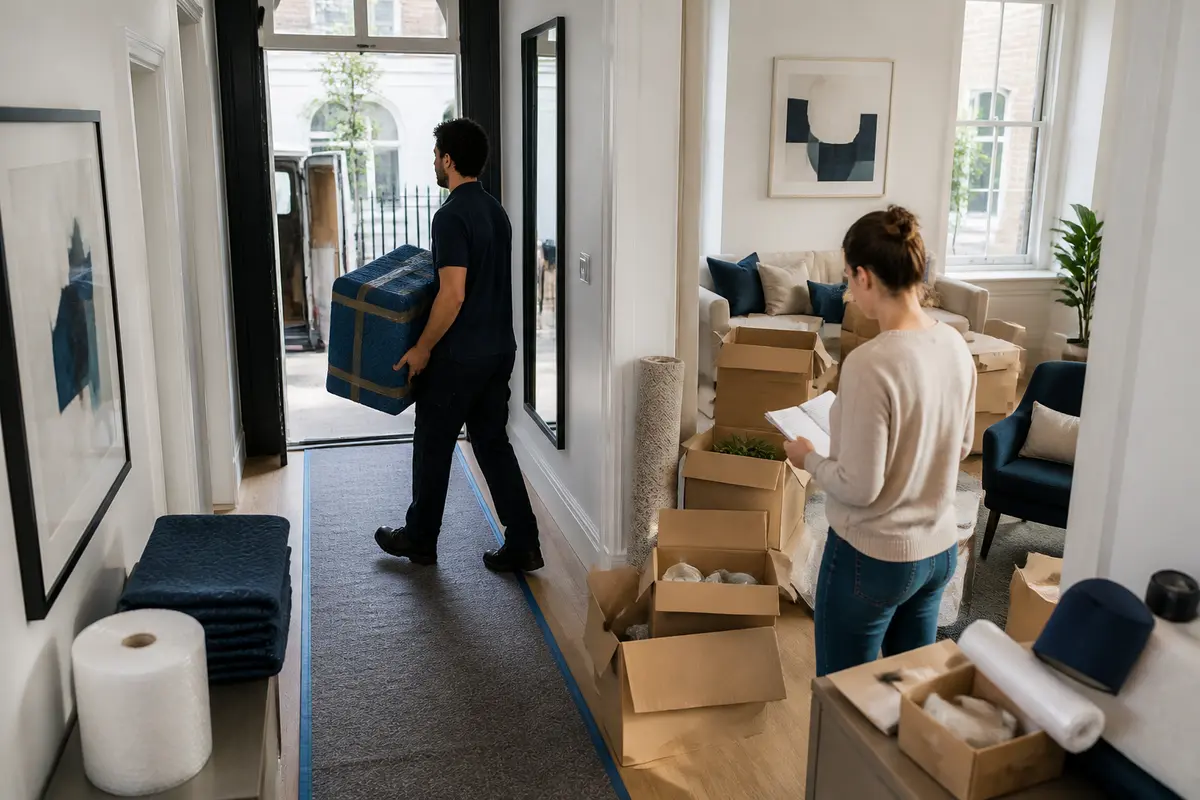
How to choose the right packing option for your move
Make the choice using the facts of your move rather than an assumption about what other households do. Professional packing vs DIY is often less about preference in principle and more about risk, capacity and timing in practice.
A simple decision checklist
- Time: Can you complete every room, including fragile items, several days before moving day?
- Volume: Are you packing a few rooms or a full family home with accumulated contents?
- Belongings: Do you have delicate, valuable or specialist items needing particular care?
- Support: Who will actually help, and what other commitments do they have?
- Budget: Have you compared the full DIY material and time commitment with the scope of a professional service?
- Access: Could stairs, lifts, parking constraints or a tight timetable increase the consequences of delay?
- Control: Would you rather personally pack everything, or would a clear brief to a packing team reduce stress?
If several answers point to limited time or high complexity, professional packing support is worth discussing. If you have time, a calm home and a dependable plan, DIY may give you the control you want. Customers arranging a London house move can discuss packing requirements with Hello Removals as part of planning the overall removal, rather than treating packing as an afterthought.
Questions to ask before arranging packing support
Before committing, ask what the service includes, when the team would pack, which materials are supplied and how boxes will be labelled. Check whether furniture protection, dismantling, unpacking or storage preparation are included or separate. Explain any access limitations and identify fragile, valuable or specialist possessions early.
Also ask what you should keep aside and what protection or contractual terms apply to professionally packed and self-packed items. Clear answers allow you to decide whether full packing, partial packing or DIY is the best fit. If you need to talk through the practical options for your own move, you can contact Hello Removals with the relevant details.
Prepare for a smoother move whichever option you choose
Good preparation improves either route. Start by reducing what you need to move, then make sure the remaining contents are grouped logically. Keep an essentials bag for the first day and separate documents, medication, valuables and anything you need during travel. Tell the removal team about parking, lift access, long carries, building rules and items that need particular attention.
For DIY packing, aim to have all cartons sealed, labelled and ready before the crew arrives. Keep walkways clear and avoid leaving loose bags or open boxes for the last minute. For professional packing, make sure the team can access rooms and cupboards, while marking possessions that must not be packed. In either case, a detailed moving day checklist can help you sequence final tasks without overlooking keys, meter readings or essential supplies.
Packing is only one part of the move administration. Once the practical arrangements are underway, plan for changing your address after moving house so that utilities, services and important correspondence are not left until the final rush. For moves involving Richmond, or any other part of London, the same principle applies: pack to a plan that leaves you ready for collection, not exhausted by it.
Frequently asked questions
Is professional packing worth it when moving house?
It can be worthwhile when time is limited, the household is large, belongings are fragile or you want to reduce the amount of work before moving day. It is not essential for every move. Compare the agreed service scope with your own available time, materials and confidence in completing the work.
Is it cheaper to pack for a move yourself?
DIY can reduce paid packing labour, but you still need to account for boxes, wrapping materials, transport for supplies and your time. Professional packing may cost more upfront while transferring work and material planning to the provider. The better value depends on your circumstances.
How much time can professional packing save?
The amount varies with the size of the home, the number of belongings, access and the agreed scope. Rather than rely on a general estimate, ask how the provider expects to schedule your particular packing work and allow time for your own sorting decisions.
Can I pack some belongings myself and use professional packers for the rest?
Often, a partial approach may be possible, such as self-packing clothes and books while seeking help with fragile rooms. Confirm availability, what will be packed professionally and how protection arrangements apply to each category.
Should I pack fragile items myself or use a professional service?
Choose the route that gives you enough time, suitable materials and confidence to pack securely. Professional support may be useful for a large quantity of delicate items, but you should still clarify the provider’s scope, methods and applicable terms.
What should I do before professional packers arrive?
Declutter, set aside documents and essentials, identify items not to pack, point out valuables or specialist possessions, and ensure reasonable access to rooms and cupboards. Tell the provider about restrictions or handling concerns in advance.
Does DIY packing affect moving-day timing?
Yes. Boxes that are unsealed, unlabelled or unfinished can delay loading and add pressure. Completing packing before the removal team arrives helps the day run more predictably.
How do I choose between professional packing and DIY packing for a London move?
Assess your deadline, household size, fragile contents, access, budget and practical support. Choose professional assistance when workload or risk is beyond your comfortable capacity; choose DIY when you have sufficient time, materials and an organised plan.
Ultimately, professional packing services vs DIY packing is a decision about how you want to use your time and manage responsibility before a move. A carefully planned DIY approach can work very well, while professional support can be a sensible way to reduce pressure in a complex or time-sensitive household move. The right option is the one that leaves your belongings prepared, your responsibilities clear and your moving day manageable.
Ready to Make Your Move Simple and Stress-Free?
Home Removals – Office Moves – Long-Distance Moving
Planning a move? Let Hello Removals take care of the hard work with a reliable, professional moving service tailored to your needs. Contact our team today for friendly advice and a free, no-obligation quote.