
Office Packing Tips for a Smooth Relocation
Discover Office Packing Tips for a Smooth Relocation from Hello Removals, with practical guidance to help your business plan, pack and move with confidence.
Packing is often the point at which an office move starts to feel disruptive. Desks contain more equipment than expected, shared cupboards hold forgotten supplies, and a missing cable or unlabelled file can delay a team’s return to work. The most useful office packing tips are therefore about more than filling boxes: they create a controlled route from the current workplace to a functioning new one. Hello Removals supports businesses planning office moves in London, and careful preparation can make the removal process easier to coordinate while helping protect staff time, equipment and business continuity.
Whether your organisation packs internally or brings in support, begin with a plan, use materials suited to the contents, and make every packed item easy to identify at the destination.
Start with an office packing plan before you fill a single box
An office move packing plan prevents last-minute decisions from becoming everyone’s problem. Before ordering boxes, agree what is moving, what is staying behind, who can make decisions and when each area must be ready. This lets the packing programme support the wider relocation rather than interrupting normal work without warning.
Build a room-by-room inventory
Walk through each room with an inventory or asset register. Include workstations, monitors, printers, filing cabinets, meeting-room equipment, kitchen contents, stationery, stored records and any bulky or fragile items. Record the destination room, department or owner as well as the item itself. Photographs can be useful reference points for complex workstations or furniture layouts, but should be stored in line with your organisation’s policies.
Mark items as move, recycle, dispose of, store or replace. Removing redundant furniture and outdated paperwork before packing reduces the number of boxes to handle and avoids paying attention to items that will not support the new office. It also gives managers a practical view of what needs specialist handling.
Building access can affect the order in which areas are packed. Lift bookings, loading restrictions, reception procedures and parking arrangements vary by building, whether the move is in Ealing or elsewhere in London. Confirm these details at both sites early, then include them in the plan shared with staff and the removal team.
Set responsibilities, deadlines and access arrangements
Give each department a packing lead, but keep central oversight. Individual employees can clear personal desk items and identify essential work materials; a facilities or move coordinator can control supplies, labels, inventory updates and access information. Set realistic cut-off dates for non-essential items, shared storage and final desk packing.
- Move coordinator: manages the packing schedule, inventory and building contacts.
- Department leads: confirm what moves and brief their teams on labels and deadlines.
- IT contact: approves the process for equipment shutdown, disconnection and reconnection.
- Staff: pack assigned personal items and identify documents or equipment needed before moving day.
Share the plan in a simple format: the area, responsible person, packing date, destination and outstanding action. It is also worth reviewing common office relocation mistakes to avoid before the schedule is fixed, particularly where teams are assuming that another department will handle a task.
Choose packing materials that protect office contents
Appropriate materials reduce the chance that contents shift, get damp, become mixed up or are difficult to carry. Order enough supplies before staff begin packing so that people do not use unsuitable containers or leave partially packed desks waiting for more boxes.
Match materials to furniture, equipment and fragile items
Use clean, sturdy packing boxes in a manageable range of sizes. Small boxes are generally better for dense contents such as books, files and stationery, while medium boxes suit lighter desk items. Use protective wrapping, packing paper or other suitable cushioning for framed items, small electronics and breakables. Avoid placing loose items directly beside monitors or other fragile equipment.
Furniture may need blankets, corner protection or wrapping to protect finishes during handling. Empty filing cabinets where possible: drawers can add weight and may open in transit. Keep printer consumables, spare parts and removable trays together in a labelled bag or box, following the manufacturer’s guidance where relevant.
Keep boxes safe to lift and easy to identify
Do not rely on a universal “safe” box weight. As the HSE manual handling guidance explains, handling includes lifting, carrying, pushing and pulling, and the risk depends on factors such as the load, route, frequency and person handling it. Fill boxes so they can be closed securely and handled without awkward movement. Use smaller boxes for heavy contents, avoid overfilling, and use trolleys or professional movers for bulky or awkward loads. Your organisation should assess its own handling risks and follow appropriate workplace procedures.
Label at least two sides of every box before it is sealed. A useful format is destination room, department, contents, box number and handling note such as “fragile” or “keep upright”. Clear labels prevent staff opening multiple boxes at the new site simply to find one adapter, folder or kitchen item.
Pack each office area in a logical order
Room-by-room packing keeps essential work available for as long as possible. Start with low-use storage, archive materials and surplus supplies, then move towards shared spaces and daily workstations. This approach gives staff time to check what they need while avoiding a final-day rush.
Pack desks and personal workstations
Ask employees to remove personal possessions, loose stationery and non-essential papers first. They should retain only the work items needed until their agreed final packing date. Pack drawer contents into labelled boxes rather than moving heavy desks with full drawers, unless a removal professional has advised otherwise. Keep keys, access fobs and any items needed for handover in a controlled, separately identified place.
For each workstation, use a box number or asset reference that connects the desk contents, computer equipment and destination position. This makes unpacking more efficient and reduces uncertainty if several teams are moving at once.
Handle office furniture and shared areas
Shared areas are easy to overlook because no single person owns them. Allocate responsibility for meeting rooms, cupboards, reception, kitchens and print areas. Pack meeting-room accessories together, empty and clean refrigerators in advance, and separate waste or recycling from items travelling to the new office. In buildings with busy loading areas, such as those often found around Mayfair, clear staging space and confirmed collection times can be as important as the boxes themselves.
Create an essentials box for the first day
Set aside clearly marked essentials boxes that travel with the move coordinator or arrive first. They might contain labelled keys, basic stationery, cleaning supplies, first-aid provisions maintained under your workplace arrangements, tea and coffee supplies, chargers, temporary signage and the printed or securely accessible unpacking plan. Keep confidential material and valuable devices out of general essentials boxes unless their custody is properly controlled.

HELLO REMOVALS
Why Choose Us? Your Move, Our Priority
- Experienced & Professional Team
- Comprehensive Service
- Local & Long-Distance Experts
- Stress-Free Moving
- Reliable & Transparent Pricing
Protect computers, IT equipment and cables during the move
Packing office equipment needs coordination with the people responsible for your systems. The physical task is straightforward only when shutdown, backups, permissions and reconnection have already been planned. Treat packing as one stage of an agreed IT process, not a substitute for technical preparation.
Prepare computers, monitors and peripherals
Before anything is unplugged, confirm with the appropriate IT contact what can be shut down and when. Staff should save work, follow internal backup procedures and close devices properly. Where possible, photograph the rear connection layout of a workstation for reference, taking care not to capture confidential information displayed nearby.
Use original packaging if it is available and appropriate; otherwise, wrap devices individually with suitable protective materials and place them in correctly sized boxes. Keep monitors upright where instructed, protect screens from pressure, and avoid stacking heavy items on top. Printers, scanners and specialist equipment may have manufacturer-specific transport guidance, so check this rather than assuming they can be handled like ordinary desk items.
Label cables and keep equipment grouped
Cable management is a small task with a large effect on reopening. Label both ends of each cable before disconnecting it, then bundle it loosely with its associated computer, monitor, docking station or phone equipment. Do not tape adhesive directly to ports or delicate surfaces. A numbered workstation label can link the device, cable bag and destination desk without putting sensitive user details on the outside of a box.
- Assign each workstation an identifier that appears on its devices, cable bag and destination plan.
- Place adaptors, power leads and small peripherals in a sealed, labelled bag within the relevant box.
- Keep shared equipment, such as meeting-room screens or printers, grouped with their accessories.
- Record damaged or unusual equipment before the move so it is not mistaken for transit damage later.
Separate packing from specialist IT disconnection
General packing staff should not make technical decisions about servers, network hardware, data connections, alarms or specialist systems. These may require an IT provider, building manager or other qualified specialist under your organisation’s procedures. The office move timeline should identify who disconnects, transports, reconnects and tests each system, as well as what staff can safely pack themselves.
The wider schedule matters because IT work can influence when a department can pack and when it can operate at the destination. If you are deciding when to begin, consider the practical factors that affect how long an office relocation takes, including access, volume, equipment and the readiness of the new premises.
Pack confidential documents and records securely
Files can be physically easy to pack but operationally sensitive to lose. A clear process protects order, reduces searching time and helps the people responsible for records know what remains in their care throughout the move. Follow your organisation’s document retention, security and disposal policies, and seek appropriate professional guidance for requirements that apply to your business.
Sort active files, archives and items for disposal
Separate active case files or current records from archives and material approved for confidential disposal. Do this before boxes are issued, rather than asking staff to make decisions hurriedly while packing. Keep files in their existing sequence where that sequence matters, and note the first and last reference in each box or use an internal inventory number.
Do not put documents marked for secure disposal into relocation boxes. Arrange the correct disposal route under your policy. For records that must move, the practical safeguards around sealing, identification and handover are explored in our guidance on secure document and file moving during an office relocation.
Use controlled labels and a clear chain of responsibility
A box labelled with a detailed client name, personnel matter or financial subject can expose more information than necessary. Use a coded department and box reference on the exterior, with the corresponding contents list held securely by authorised staff. Seal boxes where appropriate, log the number handed over and designate who checks them at arrival.
Keep especially sensitive records separate from general staging areas. The move coordinator should know when they are collected and received, but access should remain limited to the people authorised by your organisation. This is a controlled packing process, not a legal or data-security guarantee; the right arrangements depend on the type of records and your internal responsibilities.
Label, stage and check everything before moving day
Effective labelling only works when it connects the old office, the vehicle and the new layout. A consistent system lets movers place boxes in the correct area and gives department leads a way to check what has arrived without opening every container.
Use a labelling system that works at both locations
Choose destination room names or numbers before packing begins, and ensure they match the plan at the new office. Add colour coding if helpful, but do not depend on colour alone: written labels remain useful where lighting is poor or printing varies. Give each box a unique number and maintain an inventory showing its origin, destination and contents category.
Stage completed boxes in a safe, agreed area that does not block corridors, fire exits, lift lobbies or normal work routes. Keep fragile equipment, confidential records and first-day essentials separately identified. The removal team should receive a clear floor plan, loading instructions and any restrictions on lift use, deliveries or access times.
Complete a final packing and access checklist
On the day before the move, walk every area with the inventory and check that cupboards, drawers and storage rooms are empty or deliberately excluded. Confirm that boxes are sealed and labelled, furniture is ready for handling, equipment responsibilities are understood and essential items are held back. Check access arrangements at both properties again, including contacts for reception, building management and loading areas.
For businesses moving internationally, customs, destination requirements and a longer transport chain need separate planning beyond ordinary local office packing. If that is part of your project, discuss the relevant scope of European removals early rather than treating it as an extension of a standard London move.
Know when professional office packing and removal support is worthwhile
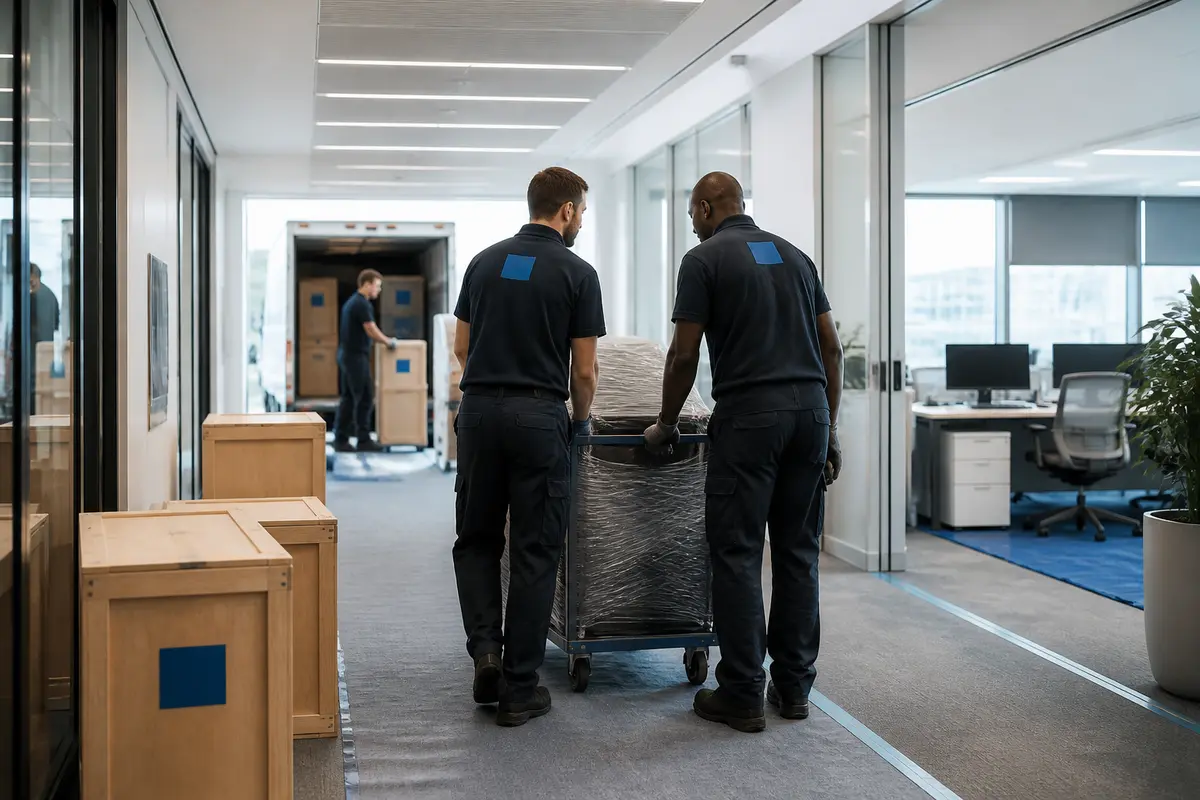
An internal pack can work well for a small, straightforward office with available staff, clear ownership and enough time. It becomes more difficult when workstations are numerous, equipment is fragile, access is restricted, deadlines are tight or business interruption must be kept to a minimum. The best choice is not always all-or-nothing: some organisations pack desk contents internally while arranging professional help for furniture, equipment protection, loading and transport.
Compare an internal pack with professional assistance
| Consideration | Internal packing | Professional support may be useful when |
|---|---|---|
| Staff time | Teams have capacity and can work to a clear plan. | Operational work cannot easily pause or coordination would fall on already busy staff. |
| Contents | Most items are light, routine and easily identified. | There is substantial furniture, fragile equipment, large volumes or awkward handling. |
| Access | Both buildings have simple routes and suitable staging space. | Lift bookings, loading restrictions, stairs or limited parking need careful coordination. |
| Control | A coordinator can oversee labelling, inventory and handover. | Additional packing structure and removal-day coordination would reduce risk of confusion. |
Professional office packing services should complement your internal process, not remove the need for decisions about records, IT or retained equipment. When assessing help, explain what you need packed, the contents that require particular care, the access conditions and the target move date. Hello Removals can be considered as part of planning office removals in London where a coordinated packing and transport approach is appropriate.
Give the removal team useful information in advance
A removal company can plan more effectively when it receives practical details before moving day. Provide floor plans, an estimate of boxes and furniture, photographs of unusual items where appropriate, lift dimensions or booking requirements, loading instructions, parking information and named contacts. Flag items that need special treatment, but do not leave technical disconnection or confidential-record decisions undefined.
Budget may also influence whether you use a full packing service or a more focused removal arrangement. Understanding how much office removals cost in London can help you compare scope thoughtfully, rather than reducing the plan to a single headline figure.
Use a final checklist for a smoother office relocation
A final office moving checklist turns planning into action. Keep it short enough to use, assign each line to an owner and review it at the end of the week before the move. The aim is not perfection; it is to identify outstanding decisions while there is still time to resolve them.
The week-before and day-before checks
- Confirm the final inventory, destination plan and labelling format with department leads.
- Finish packing non-essential areas and remove items not travelling to the new office.
- Confirm IT shutdown, disconnection and reconnection responsibilities with the relevant specialists.
- Check that confidential records have controlled labels, an inventory and an agreed handover process.
- Reconfirm access arrangements, lift bookings, loading instructions, parking and site contacts.
- Prepare first-day essentials and keep keys, passes and important contacts under the move coordinator’s control.
- Walk through each room to identify unlabelled boxes, open drawers, loose cables or items left behind.
The first-day unpacking priorities
Unpack in the order that helps the office operate: reception or entry requirements, essential IT equipment once authorised personnel are ready, core workstations, shared printing or meeting facilities, then lower-priority storage and personal items. Use the inventory to confirm arrivals and record any issue promptly. Avoid asking staff to search through every box at once; direct them to their labelled area and keep a central point for questions or missing-item reports.
Good office packing is ultimately a business-continuity task. A room-by-room inventory, sensible materials, careful labelling and clear responsibilities make it easier to protect equipment, locate documents and get teams working again. If your London move would benefit from additional coordination, packing assistance or transport planning, Hello Removals can help you explore the practical options for a planned London office removal without losing sight of the preparation your own team needs to complete.
Ready to Make Your Move Simple and Stress-Free?
Home Removals – Office Moves – Long-Distance Moving
Planning a move? Let Hello Removals take care of the hard work with a reliable, professional moving service tailored to your needs. Contact our team today for friendly advice and a free, no-obligation quote.