
Packing Tips for a Man and Van Move: A Practical Moving Checklist
Planning a move? Explore Packing Tips for a Man and Van Move from Hello Removals and prepare your belongings with practical guidance for smoother relocation.
Introduction: why packing matters on a man and van move
Good packing does more than make a property look organised before collection. It affects how safely belongings can be carried, how efficiently the van can be loaded and how easily you can settle in at the other end. These packing tips for a man and van move are designed for London house, flat, student and small-office moves where space, timing and access can all matter.
Hello Removals provides man and van services in London, and the most useful preparation starts well before the van arrives. A clear plan, sensibly packed boxes and honest information about the property allow you and your moving team to focus on safe handling rather than last-minute decisions. The aim is not to make every box perfect; it is to make each item identifiable, protected and practical to move.
Plan the move before packing the first box
Create a room-by-room packing plan
Start by listing each room, cupboard and storage area, then set a realistic order for packing. Begin with belongings you use least often: books, ornaments, out-of-season clothing, spare kitchenware and décor. Leave everyday cooking equipment, work essentials and toiletries until nearer the move date. This room-by-room approach reduces the risk of mixing unrelated items into random cartons.
Give every room a simple label name and use it consistently on boxes. For a small office move, separate files, cables and equipment by workstation or department. For a flat move, note items stored in communal cupboards, balconies or loft spaces. A plan also helps you estimate the number of removal boxes and decide whether the job remains suitable for a man and van or needs the broader planning involved in house removals in London.
Declutter and decide what is actually moving
Decluttering before moving saves packing materials, van space and lifting time. Sort items into four groups: take, donate, sell and dispose of responsibly. Be decisive about damaged furniture, duplicate kitchen items, unread paperwork and clothing that no longer fits your needs. Avoid using the move as a reason to transport things you already know you will not keep.
Set aside items that need a separate decision, such as goods for recycling, confidential documents or possessions that may go into storage. If your new property will not be ready for everything, investigate man and van storage solutions early rather than packing without a destination in mind. The important point is to tell your chosen provider what is moving and what is not, so the expected load is accurate.
Check access, timing and communication requirements
Before buying boxes, walk the collection and delivery routes. Consider stairs, lifts, narrow hallways, parking restrictions, loading bays, gate codes and the distance from the door to where the van can stop. Measure unusually large furniture if it may need to pass through tight turns. Mention heavy, awkward or unusually delicate belongings when discussing the move; they may need different handling, protection or extra time.
Confirm the collection address, delivery address, move date and contact number with everyone involved. It is also sensible to ask about what is included, possible extra charges, insurance arrangements and the procedure if access is delayed. The UK’s official moving home guidance similarly highlights clearing unwanted possessions, confirming arrangements and discussing difficult access or unusual items before moving day.
Local conditions can vary even within a short distance. If collection or delivery is in Islington, for example, establish the practical loading point rather than assuming the van can wait immediately outside. Clear communication prevents packing work from being undermined by avoidable access problems.
Choose materials and pack boxes for safe handling
Use the right box sizes and protective materials
Strong, clean cardboard boxes with intact bases are easier to stack and less likely to buckle than overused cartons. Use small boxes for dense items, medium boxes for general household belongings and larger boxes only for light, bulky things such as bedding, cushions and lampshades. Keep a supply of packing tape, marker pens, packing paper, bubble wrap and protective blankets ready before you start.
Line boxes containing breakables with crumpled paper or other cushioning, fill significant gaps so contents cannot shift, and tape the base as well as the top. Avoid relying on bin bags for anything sharp, fragile or heavy. They can be useful for soft clothing or linens, but they offer little shape, stacking strength or protection.
Pack heavy and light belongings safely
A box should be comfortable to lift with both hands and should close properly without bulging. Put books, tools, tins and other dense belongings into smaller boxes, adding lighter items on top only if there is room. Never make a carton heavy merely because it still has empty space. Large boxes are for lighter contents; this makes carrying safer and reduces the chance of the bottom giving way.
Use heavier items to create a stable base, but do not place anything hard directly against glass, screens or polished surfaces. Secure loose lids, wrap sharp edges and keep liquids upright in sealed containers. If you have a large quantity of books, files or equipment, flag it when arranging the service so van capacity and loading order can be planned sensibly.
Label every box clearly
Knowing how to label moving boxes is one of the simplest ways to make unloading faster. Mark the room, a short description of contents and handling instructions where necessary. Write on at least two sides and the top, so labels remain visible when boxes are stacked. Examples include “Kitchen — mugs and bowls — fragile” or “Bedroom 2 — winter clothes”.
- Use a consistent room name that matches the new property.
- Mark fragile boxes visibly, but still pack them securely rather than relying on the label alone.
- Number cartons if you are keeping a moving inventory.
- Keep cables with the device they belong to and label both.
Clear box labelling helps movers place cartons in the right rooms and helps you prioritise unpacking. It also means you are less likely to open every box looking for one necessary item.

HELLO REMOVALS
Why Choose Us? Your Move, Our Priority
- Experienced & Professional Team
- Comprehensive Service
- Local & Long-Distance Experts
- Stress-Free Moving
- Reliable & Transparent Pricing
Pack fragile, valuable and awkward items with extra care
Protect glassware, crockery and other fragile belongings
When considering how to pack fragile items for moving, focus on preventing movement inside the box. Wrap plates individually and place them upright in a sturdy, appropriately sized carton. Wrap glasses and mugs one at a time, filling hollow centres with paper where useful, and use cushioning between layers. Do not place a heavy object on top of delicate items simply to fill a gap.
For mirrors, framed pictures and screens, use suitable protective material around corners and faces, then keep them upright rather than flat beneath other goods. Clearly identify them to the moving team. Very valuable, sentimental or irreplaceable belongings may be better carried with you if practical. If there is any uncertainty about an unusual item, discuss it with the provider in advance rather than making assumptions about what can be carried or how it should be protected.
Prepare furniture and large items for transport
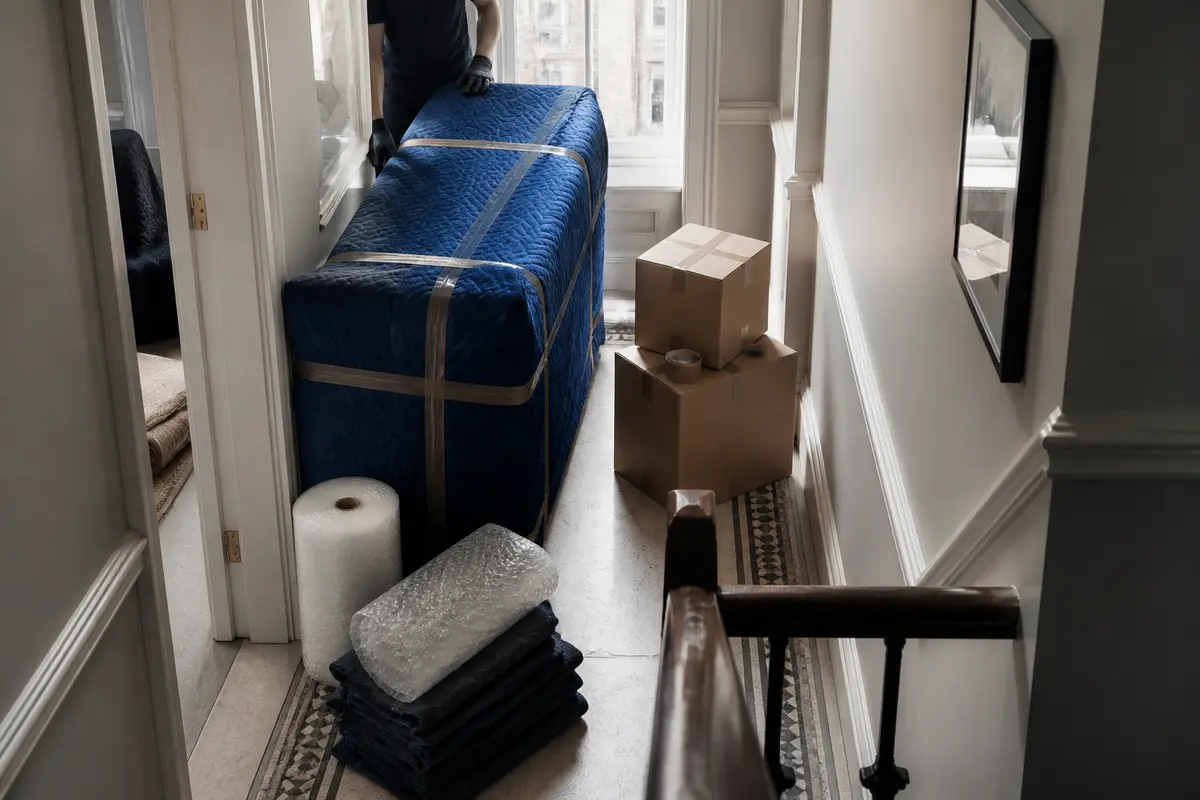
Packing furniture for removal is largely about protecting surfaces, securing moving parts and making the item manageable. Empty drawers where contents are heavy or loose, remove detachable shelves where appropriate, and keep fittings in a labelled bag taped to the relevant item or stored in your essentials box. Protect corners, polished surfaces and vulnerable edges with suitable furniture protection or protective blankets.
Take photographs before disassembly if reassembly will be your responsibility. Keep instructions, screws and small components together. Do not dismantle an item unless you can do so safely and know how it will go back together. Tell the service provider about wardrobes, bed frames, desks, large appliances or pieces requiring disassembly, as this affects time, tools and the loading plan.
A student move may involve fewer furnishings but still needs the same discipline with monitors, instruments and boxed books. Where the load is compact but time is limited, man and van help for student moves can be relevant; packing by category and labelling accommodation details still makes collection and delivery far easier.
Keep important and personal items organised
Keep documents, medication, keys, wallets, chargers, jewellery and other personal essentials out of the general removal load. Use a backpack, locked case or clearly controlled bag that stays with you. Include tenancy paperwork, identification, prescriptions, spare keys and any instructions needed on arrival.
Create a short inventory for higher-value or easily misplaced items. This is not about producing a complicated catalogue for every spoon; it is about retaining control of things that would cause immediate difficulty if misplaced. A simple list also helps you confirm that key bags, boxes and furniture have arrived before the team leaves.
Pack an essentials box and prepare for moving day
Include the items needed on the first night
An essentials box prevents a tiring moving day becoming more difficult once the van is unloaded. Pack it last and keep it separate from ordinary cartons. It should travel with you where possible, or be clearly identified for immediate access at delivery.
- Toiletries, medication, toilet roll, towels and a change of clothes.
- Phone chargers, basic tools, cleaning products, bin bags and light bulbs.
- Bedding, pyjamas, mugs, water, simple food and pet supplies if relevant.
- Keys, important documents and any access instructions for the new property.
Think realistically about the first evening: you may not want to search through boxes for a kettle lead, sheets or cleaning cloths. An essentials box is particularly valuable where there could be a delay in access or where children, pets or work commitments need immediate attention.
Keep a final-items list and moving inventory
On the day before collection, make a final-items list. It should cover things that are easy to overlook because they are still in use: chargers, remote controls, fridge contents, cleaning items, curtains, balcony furniture and anything stored in a shed or communal area. Check cupboards, drawers, loft hatches and utility spaces as you go.
If you numbered boxes, note the number, room and broad contents on a phone note or paper list. This creates a useful handover check without slowing the move down. It can also help distinguish a misplaced box from one that has simply been delivered to a different room.
Make collection and loading easier
Finish loose packing before the agreed arrival time. Clear walkways, keep children and pets away from carrying routes, and place packed boxes together by room where possible. Do not block exits with cartons. Set aside the items that must not be loaded and point them out clearly.
Loading order matters: heavier, stable items normally form the base, while fragile boxes and items needed first at delivery should remain accessible. You do not need to direct every lift, but you should be ready to explain room labels, access arrangements and any item that needs special care. For a move involving Stratford, confirm practical details such as parking, lift booking and concierge procedures ahead of time rather than on arrival.
Common packing mistakes that make a man and van move harder
Rushing the final packing stage
Last-minute packing often leads to unlabelled bags, loose items and boxes with mixed contents. It also makes it harder to explain the real size of the job. Finish most packing the day before and reserve only essential daily-use belongings for the morning. If plans change and you need urgent assistance, understand what same-day man and van services in London involve, but do not treat urgency as a substitute for secure packing and clear information.
Creating boxes that are too heavy or poorly secured
Overfilled cartons are difficult to carry, difficult to stack and more likely to split. Underfilled fragile boxes can be equally risky because contents move around. Use enough internal cushioning, keep weight manageable and tape seams properly. Loose items should be boxed, bagged or otherwise contained; they take longer to load and are easier to damage or lose.
Forgetting access and service requirements
A well-packed home can still be difficult to move if the team cannot park, use the lift or reach the property without delay. Confirm restrictions, stairs, loading arrangements and any building rules in advance. Also ask whether there are items the provider cannot carry or items requiring prior notice. These practical checks are among the common man and van moving mistakes worth avoiding because they affect the whole move, not just one box.
When professional man and van help may be useful
Consider the size, complexity and time available
Professional help can be useful when you have furniture, multiple rooms, fragile belongings, difficult access or limited time to carry and load safely. A smaller move may be straightforward with a man and van, while a larger property, several movers or a more structured packing plan may call for a different service. The right decision depends on the volume of belongings, the route between properties and how much preparation you can complete yourself.
It is also worth considering whether you need help only with transport or need support with lifting, protective materials and loading. If you are weighing a man and van or removal company, compare the move’s practical requirements rather than choosing solely by the number of boxes.
Match packing preparation to the type of move
A house move often needs more detailed room labelling and furniture preparation. A flat move may make lift times, parking and stairs the priority. A small office move needs a clear system for technology, files and furniture so work can resume with less disruption. In every case, the core packing advice remains the same: reduce what is moving, protect vulnerable items, use liftable boxes and make the destination of each carton obvious.
Professional moving support works best when it complements your preparation. Providing an honest list of large items, packed box count, access details and special requirements helps Hello Removals assess the move properly. It is far more useful than trying to conceal awkward items until collection.
Confirm the plan before moving day
In the final day or two, confirm the date, addresses, contacts, access instructions and the expected scope of work. Recheck that boxes are sealed, labels are readable and furniture that needs attention has been prepared. Keep the essentials box, valuables and keys separate. If delays are possible because of handover timing, building access or other circumstances, raise them before the van arrives.
For readers who want practical assistance alongside careful preparation, Hello Removals can discuss London man and van support in relation to the size and requirements of the move. The useful next step is a clear conversation based on the real load and access conditions, not a vague estimate.
Final packing checklist for a smoother move
Use this man and van packing checklist in the days before collection:
- Decluttered unwanted belongings and decided what will be donated, sold, recycled or stored.
- Checked both properties for parking, stairs, lifts, narrow access and collection or delivery restrictions.
- Obtained sturdy moving boxes and packing materials appropriate for fragile and bulky belongings.
- Packed heavy items in small cartons and light items in larger cartons.
- Sealed boxes securely and labelled the room, contents and any handling needs.
- Wrapped glass, crockery, mirrors, electronics and furniture surfaces appropriately.
- Set aside documents, medication, valuables, keys and chargers to travel separately.
- Prepared a first-night essentials box and a final-items list.
- Confirmed the move plan, contact details, access arrangements and unusual-item requirements.
- Cleared pathways and grouped ready-to-load boxes without obstructing exits.
The best packing tips for a man and van move are ultimately practical: pack early, keep weight sensible, protect what is vulnerable and communicate what the job involves. That preparation makes loading calmer, helps belongings reach the correct room and gives you a better start in the new property. If you need moving support, provide Hello Removals with an accurate picture of your belongings and access so the service can be matched to the move.
FAQs about packing for a man and van move
How early should I start packing for a man and van move?
Start with non-essential belongings as soon as your move date is reasonably clear. Aim to have most boxes packed by the day before collection, leaving only everyday essentials for last.
What should I pack first when moving house?
Pack rarely used items first, including books, décor, seasonal clothing, spare linens and non-essential kitchenware. Keep daily toiletries, medication, chargers and basic cooking items accessible until near moving day.
Can I use large boxes for books?
It is better to use small, sturdy boxes for books and other dense items. Large book boxes quickly become too heavy to lift safely and can be difficult to stack.
How should I label boxes for a move?
Write the destination room, a short contents description and any handling instruction on the top and at least two sides. Use the same room names that you will use at the new property.
Should I dismantle furniture before the man and van arrives?
Only dismantle furniture if it is safe, necessary and you can keep fittings organised. Tell the provider in advance about large items or any disassembly needs so the moving plan can account for them.
What should stay with me rather than going in the van?
Keep keys, identification, important documents, medication, valuables, chargers and your essentials box with you where practical. These are the items you are most likely to need immediately.
Ready to Make Your Move Simple and Stress-Free?
Home Removals – Office Moves – Long-Distance Moving
Planning a move? Let Hello Removals take care of the hard work with a reliable, professional moving service tailored to your needs. Contact our team today for friendly advice and a free, no-obligation quote.